
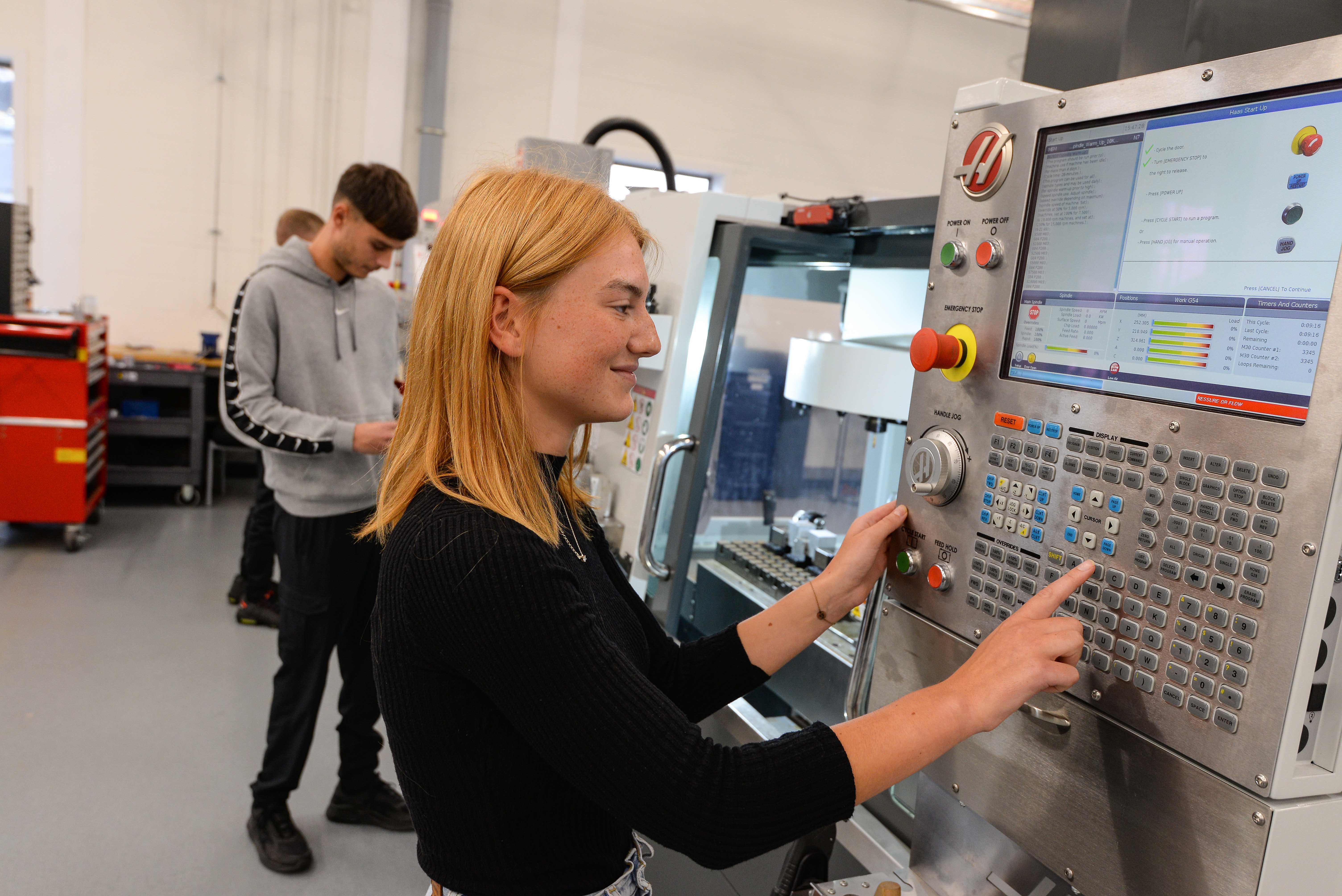
L3 Machining Technician Standards Apprenticeship
This occupation is found in the Advanced Manufacturing and Engineering (AME) sector. AME includes Aerospace, Automotive, Maritime Defence, Nuclear and Construction sectors. Machining technicians produce complex and precision machined products that are typically used in machinery. For example, aeroplanes and vehicles. They can also produce bespoke components or products for domestic appliances or medical equipment. They use a variety of machines to carry out their work. For example, centre lathes, vertical and horizontal milling machines, horizontal and cylindrical grinding machines. Electro discharge machines, single and multi-axis Computer Numeric Control (CNC) machine tools centres. Gear cutting and Gear Grinding machines.
The broad purpose of the occupation is to produce complex and precision work by machining components. Components are machined from metal or specialist materials using conventional or CNC machine tools. Machining Technicians interpret information and plan their activities. They also set up, operate and adjust machine tool settings. When using CNC equipment, they can produce, prove and validate programs. They inspect components and machinery, report issues and support continuous improvement activities. They typically work in a manufacturing environment. Depending on the organisation, they may be required to work at height or work shifts.
Level 3 Machining Technician apprentices are required to attend Furness College one day per week for Off the Job Training. These sessions are both practical and theory based and delivered by expert tutors. Apprentices are supported to gain and develop relevant Knowledge, Skills and Behaviours.
What qualification will I achieve? EAL L3 Extended Diploma in Machining (Development Knowledge)
How long is the course? 42 Months
Course Content
What Modules will you Study?
- Machining Principles and Equipment
- Engineering Drawings and Technical Data
- Engineering Mathematical & Scientific
- Health & Safety in Engineering
- Principles of Engineering
- Quality Standards in Engineering
Where will I learn?
Channelside CampusHow much will this course cost?
There are no fees for apprentices.Apprentices will receive a wage from their employer.
Entry Requirements
What are the entry requirements?
Individual employers will set the recruitment and selection criteria for their Apprenticeships.In order to optimise success, candidates will typically have GCSEs at Grade 4 or Grade C or equivalent in Mathematics and English, but can study these subjects during the apprenticeship.
Progression
What opportunities will this lead to?
On successful achievement of this apprenticeship learners typically will be employed in roles such as:- Centre Lathe Turner
- CNC Centre Lathe Turner
- CNC EDM Machinist Technician
- CNC Gear Cutter
- CNC Machinist
- Conventional Vertical Borer
Barrow-In-Furness
Cumbria
LA14 2PJ

Barrow-In-Furness
Cumbria
LA13 9LE
Tel: 01229 828 377 (The Sixth Form)
Email: info@furness.ac.uk